

The Sound of Machines - Introducing the Spinner 1 | A Motor-Controlled Musical Instrument
infoAbout This Title
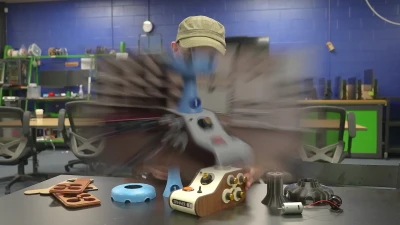
The Spinner 1 is a new electronic instrument being developed through a partnership between The Sound of Machines and Lunch.
I recently shared an early prototype on Instagram, and the response was much larger than I expected. A lot of folks responded that they were interested in owning one.
A. LOT.
So...here’s where I jumped the gun a little. The prototype worked, but I was already planning to take it apart and rethink the design.
Which is exactly what I did before realizing I probably should have made a few more videos with it first. Live and learn, etc.
Since you’re here on Patreon, you’ll get to follow along as it becomes a real instrument.
Building It With Lunch
The Spinner 1 will be the first Sound of Machines instrument developed in partnership with Chris McDowell and his design studio, Lunch.
Before starting Lunch, Chris ran Super Synthesis for around ten years, producing Eurorack modules and other electronic music equipment.
He’s also an electrical engineer, which is extremely helpful because I have spent years coming up with things I want instruments to do without knowing how to make them happen properly. See: The Cassettone Two.
Until now, most Sound of Machines instruments have been handmade experiments built in my studio. They were made to test ideas and create unusual sounds, but not necessarily to survive regular use.
Chris is helping turn the Spinner 1 into something that keeps the strange character of the prototype while being built using established electronics and manufacturing practices.
Like a REAL DAMN INSTRUMENT!
How the Spinner 1 Works
The Spinner 1 is part musical instrument, part sound-design device, and part art object.
Basically, a motor making strange noises, but with some wild “ooomph” behind it.
A small motor spins an object mounted to the top of the instrument. The speed and mass of that spinner create vibrations, which are picked up inside the unit and converted into an audio signal.
Changing the speed changes the pitch and texture. Different spinner shapes and materials will also create their own rhythmic and tonal characteristics.
Onboard Effects and Outputs
The finished version is being designed to work as both a raw mechanical sound source and a standalone instrument with its own suite of onboard effects.
The current plan includes tremolo, distortion, filtering, and reverb.
It will also have separate wet and dry outputs.
The dry output will provide the unaffected motor signal, ready to run through pedals, modular equipment, software, or whatever else you decide to put in its path.
The wet output will carry the sound processed by the Spinner 1’s onboard effects.
MIDI and Performance Controls
The Spinner 1 will also communicate with music software through USB-C.
The controls will be able to send MIDI information to effect racks, plug-ins, and other software parameters. This will allow the instrument to create its own sounds while also controlling a larger computer-based setup.
There will also be a momentary mute button.
In one mode, pressing it will briefly cut the signal. In another, the instrument will stay silent until the button is pressed, allowing short bursts of sound to come through.
The mute circuit is being designed to avoid the loud click or crack that often happens when a signal is interrupted mechanically.
The Physical Design
The visual design is influenced by retro-futurist objects, particularly the props, machinery, and miniature sets found in science-fiction films and those creepy marionette shows from the ’60s.
I want it to feel like an instrument you’d find sitting on the set of one of those shows. Vaguely familiar, but not quite like anything you have seen before.
The design is still changing, and you’ll see those changes here as the enclosure, controls, spinner, and internal layout are finalized.
Some ideas will make it into the finished instrument. Others will probably create three additional problems and quietly disappear.
Availability and Pricing
The current target for availability is December 2026.
Chris and I still need to finalize the circuitry, fit everything inside the enclosure, test materials, select manufacturers, and design the packaging. All the less-visible parts of making an instrument.
The Spinner 1 is planned as a limited run, with a presale coming before the full release.
The final price has not been determined. It will depend on the materials, circuit boards, manufacturing quantities, hardware, assembly, and packaging.
As soon as those details are locked in, you’ll hear about them here first.
What Happens Next
This is where I’ll share the ongoing development of the Spinner 1, including prototype updates, circuitry decisions, design changes, production details, and anything else that comes up along the way.
You’ll also get the first information about the price, presale window, release date, and how the ordering process will work.
Stay tuned here for more updates!
The Spinner 1 is a new electronic instrument being developed through a partnership between The Sound of Machines and Lunch.
I recently shared an early prototype on Instagram, and the response was much larger than I expected. A lot of folks responded that they were interested in owning one.
A. LOT.
So...here’s where I jumped the gun a little. The prototype worked, but I was already planning to take it apart and rethink the design.
Which is exactly what I did before realizing I probably should have made a few more videos with it first. Live and learn, etc.
Since you’re here on Patreon, you’ll get to follow along as it becomes a real instrument.
Building It With Lunch
The Spinner 1 will be the first Sound of Machines instrument developed in partnership with Chris McDowell and his design studio, Lunch.
Before starting Lunch, Chris ran Super Synthesis for around ten years, producing Eurorack modules and other electronic music equipment.
He’s also an electrical engineer, which is extremely helpful because I have spent years coming up with things I want instruments to do without knowing how to make them happen properly. See: The Cassettone Two.
Until now, most Sound of Machines instruments have been handmade experiments built in my studio. They were made to test ideas and create unusual sounds, but not necessarily to survive regular use.
Chris is helping turn the Spinner 1 into something that keeps the strange character of the prototype while being built using established electronics and manufacturing practices.
Like a REAL DAMN INSTRUMENT!
How the Spinner 1 Works
The Spinner 1 is part musical instrument, part sound-design device, and part art object.
Basically, a motor making strange noises, but with some wild “ooomph” behind it.
A small motor spins an object mounted to the top of the instrument. The speed and mass of that spinner create vibrations, which are picked up inside the unit and converted into an audio signal.
Changing the speed changes the pitch and texture. Different spinner shapes and materials will also create their own rhythmic and tonal characteristics.
Onboard Effects and Outputs
The finished version is being designed to work as both a raw mechanical sound source and a standalone instrument with its own suite of onboard effects.
The current plan includes tremolo, distortion, filtering, and reverb.
It will also have separate wet and dry outputs.
The dry output will provide the unaffected motor signal, ready to run through pedals, modular equipment, software, or whatever else you decide to put in its path.
The wet output will carry the sound processed by the Spinner 1’s onboard effects.
MIDI and Performance Controls
The Spinner 1 will also communicate with music software through USB-C.
The controls will be able to send MIDI information to effect racks, plug-ins, and other software parameters. This will allow the instrument to create its own sounds while also controlling a larger computer-based setup.
There will also be a momentary mute button.
In one mode, pressing it will briefly cut the signal. In another, the instrument will stay silent until the button is pressed, allowing short bursts of sound to come through.
The mute circuit is being designed to avoid the loud click or crack that often happens when a signal is interrupted mechanically.
The Physical Design
The visual design is influenced by retro-futurist objects, particularly the props, machinery, and miniature sets found in science-fiction films and those creepy marionette shows from the ’60s.
I want it to feel like an instrument you’d find sitting on the set of one of those shows. Vaguely familiar, but not quite like anything you have seen before.
The design is still changing, and you’ll see those changes here as the enclosure, controls, spinner, and internal layout are finalized.
Some ideas will make it into the finished instrument. Others will probably create three additional problems and quietly disappear.
Availability and Pricing
The current target for availability is December 2026.
Chris and I still need to finalize the circuitry, fit everything inside the enclosure, test materials, select manufacturers, and design the packaging. All the less-visible parts of making an instrument.
The Spinner 1 is planned as a limited run, with a presale coming before the full release.
The final price has not been determined. It will depend on the materials, circuit boards, manufacturing quantities, hardware, assembly, and packaging.
As soon as those details are locked in, you’ll hear about them here first.
What Happens Next
This is where I’ll share the ongoing development of the Spinner 1, including prototype updates, circuitry decisions, design changes, production details, and anything else that comes up along the way.
You’ll also get the first information about the price, presale window, release date, and how the ordering process will work.
Stay tuned here for more updates!

Comments (0)