Julia Dreams - How Underpainting Improves Your Painting
infoAbout This Title
Why Use Underpainting?
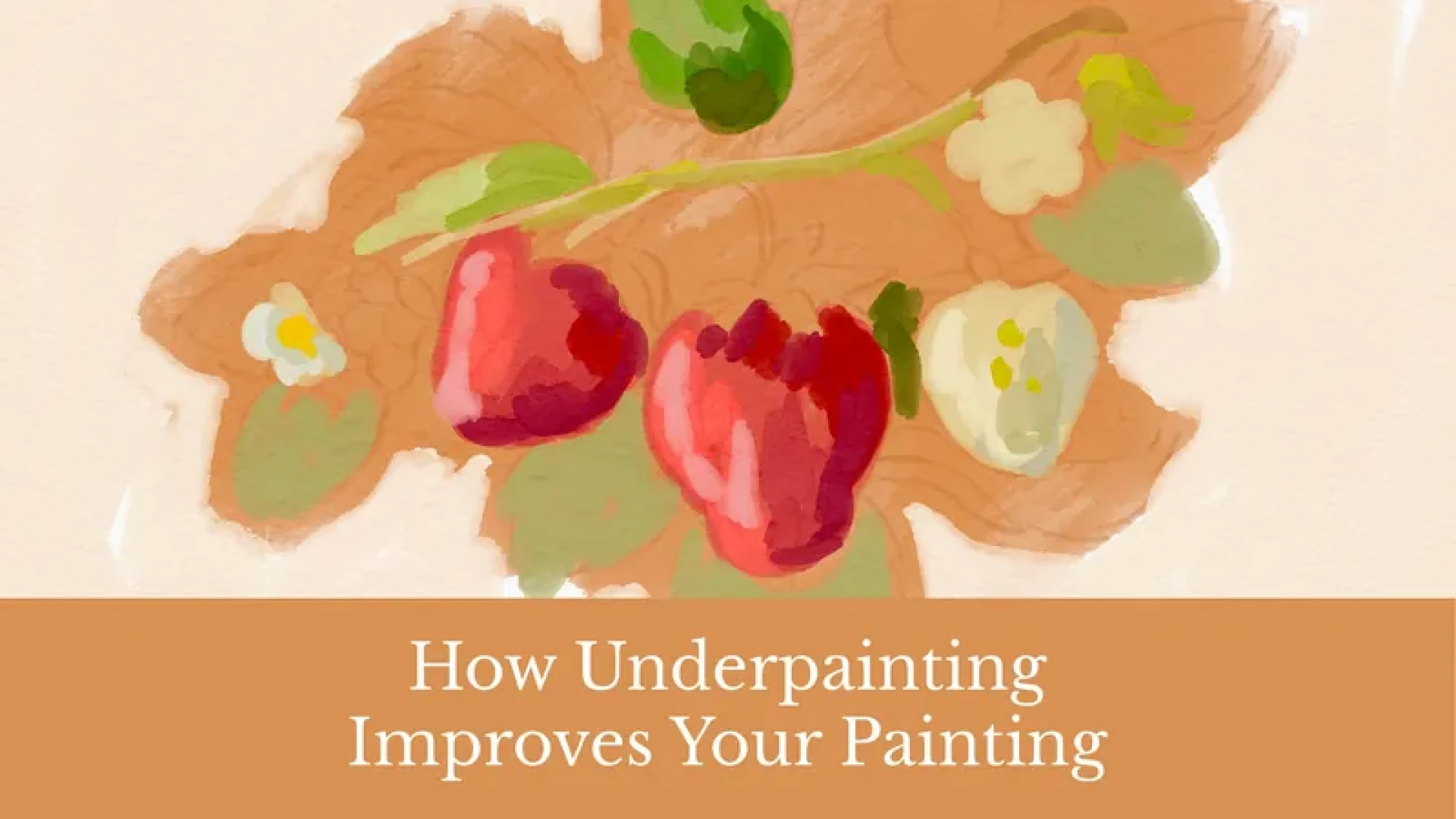
Underpainting isn't essential, but it can completely change the way you paint. Many artists begin with an underpainting because it helps establish the overall mood, creates color harmony, and makes the painting process much more intuitive. It's a technique widely used in both traditional painting and illustration.
Underpainting is especially beneficial when working with opaque mediums such as oil paint, gouache, and oil pastels.
Establish the Mood from the Beginning
An underpainting sets the overall color atmosphere before you start adding details. Pure white paper can make it difficult to judge color values accurately. Even if small areas remain visible, they'll contribute to the overall harmony of the painting.
Unify Your Color Palette
Painting directly on bright white paper can make each color feel separate and disconnected. A light underpainting creates a unified color foundation, helping every layer relate naturally to the others. This is one of the simplest ways to achieve a more cohesive painting.
Add Depth and Color Richness
Although gouache is an opaque medium, thin layers often allow subtle hints of the underpainting to show through. These gentle color variations create depth and add a more natural, painterly appearance.
Choosing an Underpainting Color
The color of your underpainting should reflect the mood and lighting of your painting. Warm underpaintings work beautifully for sunny scenes, while cool underpaintings are ideal for overcast weather, winter landscapes, or atmospheric subjects.
Once you start using underpainting, you'll begin to notice how much easier it becomes to create cohesive, balanced, and atmospheric paintings.
Julia.
Why Use Underpainting?
Underpainting isn't essential, but it can completely change the way you paint. Many artists begin with an underpainting because it helps establish the overall mood, creates color harmony, and makes the painting process much more intuitive. It's a technique widely used in both traditional painting and illustration.
Underpainting is especially beneficial when working with opaque mediums such as oil paint, gouache, and oil pastels.
Establish the Mood from the Beginning
An underpainting sets the overall color atmosphere before you start adding details. Pure white paper can make it difficult to judge color values accurately. Even if small areas remain visible, they'll contribute to the overall harmony of the painting.
Unify Your Color Palette
Painting directly on bright white paper can make each color feel separate and disconnected. A light underpainting creates a unified color foundation, helping every layer relate naturally to the others. This is one of the simplest ways to achieve a more cohesive painting.
Add Depth and Color Richness
Although gouache is an opaque medium, thin layers often allow subtle hints of the underpainting to show through. These gentle color variations create depth and add a more natural, painterly appearance.
Choosing an Underpainting Color
The color of your underpainting should reflect the mood and lighting of your painting. Warm underpaintings work beautifully for sunny scenes, while cool underpaintings are ideal for overcast weather, winter landscapes, or atmospheric subjects.
Once you start using underpainting, you'll begin to notice how much easier it becomes to create cohesive, balanced, and atmospheric paintings.
Julia.
groupArtist
 1k+
Julia Dreamsverified
photo_library1 albums
visibility2.7K views
View Profile arrow_forward
1k+
Julia Dreamsverified
photo_library1 albums
visibility2.7K views
View Profile arrow_forward
Comments (0)