
Page 1 failed to load.
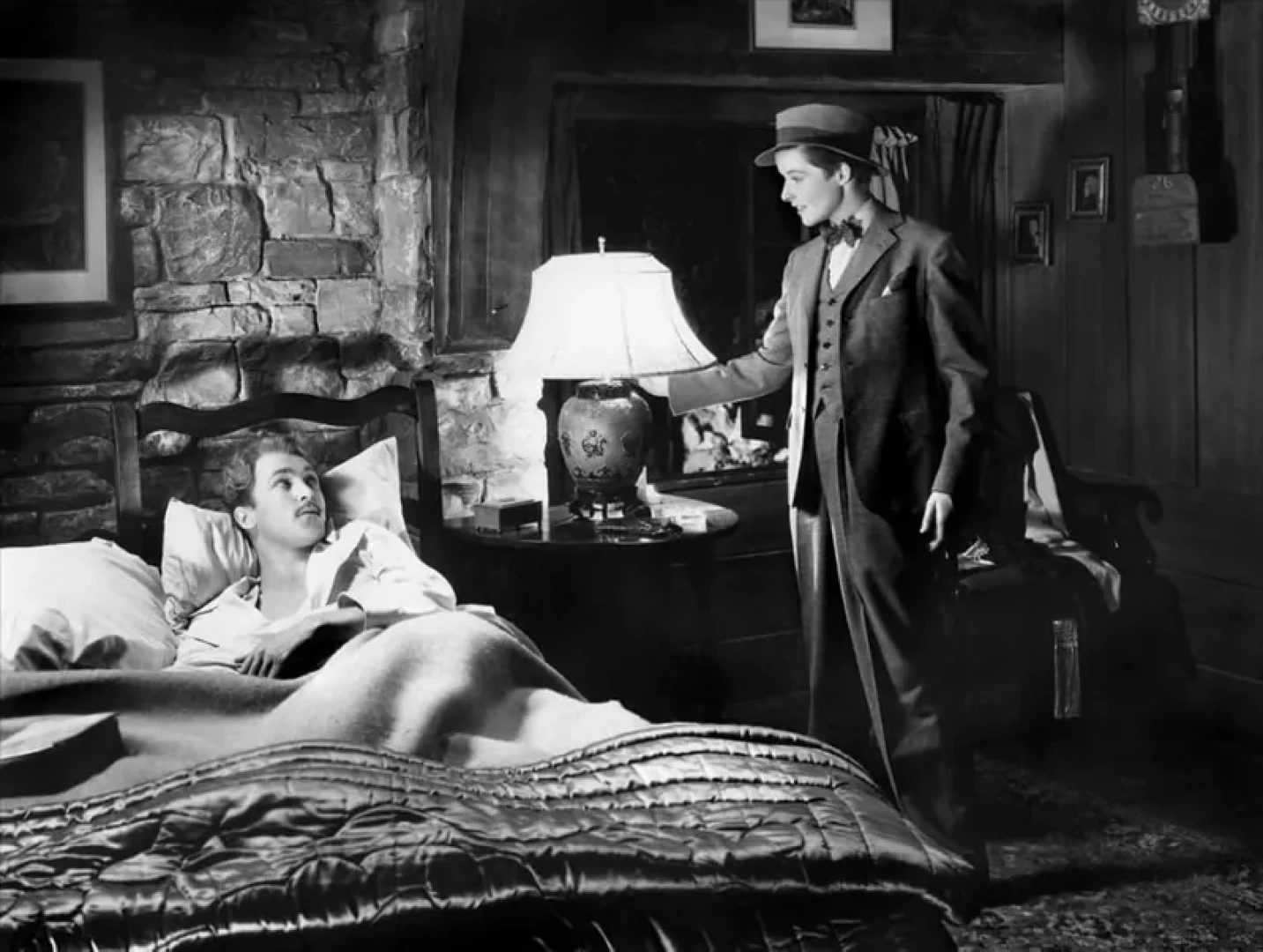
Mike D'Angelo - Sylvia Scarlett (1935, George Cukor)
 More from Mike D'Angelo
Mike D'Angelo - The Texas Chain Saw (Chainsaw) Massacre (2)
About This Title
53/100
Shifts identities even more casually than does its title character (who goes by Sylvester for much of the film); when what had first appeared to be a cross-dressing story turned into a con-artist romp and then saw the entire ensemble abruptly give up their lives of crime to start a traveling theater troupe, I flashed on Craig-inhabiting-Malkovich telling Malkovich’s agent that henceforth he wants his name to be synonymous with puppets. (“No problemo. Poof, you’re a puppeteer. Just lemme make a couple calls.”) Audiences notoriously rejected Sylvia Scarlett when it was first released, and I’d always assumed they just weren’t prepared for female cross-dressing—a notion that required ignoring or forgetting about Marlene Dietrich’s popularity in men’s clothes just a few years earlier. And I’m now more inclined to blame the movie’s commercial failure on the fact that it’s a big ol’ mess. Compton McKenzie’s 1918 source novel may have successfully weaved a coherent tapestry from these picaresque adventures, but Cukor’s approach onscreen feels more haphazardly Okay This Now, especially when it comes to Cary Grant’s initially charming rogue Monkley (who abruptly becomes an outright villain toward the end, mostly offscreen) and Brian Aherne’s rival love interest, Michael Fane (who doesn’t even appear until roughly the film’s midpoint). Turns out McKenzie wrote The Early Life and Adventures of Sylvia Scarlett as a sequel to his 1914 novel Sinister Street, which was all about…Michael Fane. So it’s sort of akin to watching Spider-Man: Homecoming without having seen anything involving Iron Man and being thrown off by Tony Stark’s appearance. The idea was meant to be that you’ve been waiting for him all along.
To be fair, subsequent and much more notable Hepburn–Grant pairings have retroactively unbalanced Sylvia Scarlett for today’s viewer, making Aherne (who’s no Jimmy Stewart) come across more like an interloper. I enjoyed the film most during its early con-men stretch, after Sylvia and her father team up with Monkley to fleece gullible passersby…though, oddly, the film kinda loses sight for a while of Sylvia being disguised as a boy, creating mishaps that hinge on her e.g. angrily accusing someone of stealing from a hat being passed around, having momentarily forgotten that the poor waif she’s playing isn’t supposed to know a word of English. Don’t mean to undermine queer scholars for whom Hepburn-as-Sylvia-as-Sylvester represents a very early Hollywood instance of playing with gender identity, but this seems to me firmly in the Shakespearean tradition of cross-dressing (Portia, Viola, Rosalind), which is much more about engineering plot complications than it is about tackling issues of presentation or dysphoria. Though the nonchalant response of both Fane and Monkley when Sylvia finally reveals herself as female is quite interesting, as both men seem equally attracted to him/her before and after. Were the movie actually about this conundrum…well, that probably would have been too much for 1935 America. (Arguably it’s too much for 2026 America.) Sylvia Scarlett’s problem is that, while always engaging, it never quite coalesces into being about much of anything, narratively or thematically or even tonally. (Sylvia’s father’s fate is too grim for this context, though I say that without being able to define said context.) But that shouldn’t make a plainly superb actor “box-office poison” (SPOILER: she recovered) and neither should it stop you from watching a fascinating experiment that didn’t pan out.

Comments (0)