
Page 1 failed to load.
Mike D'Angelo - Festival Flashback: Case 137, La bola negra, Once Upon a Time in Harlem
 More from Mike D'Angelo
Mike D'Angelo - The Texas Chain Saw (Chainsaw) Massacre (2)
About This Title
Resuscitating reviews I wrote at festivals that Patreon’s crap search engine wouldn't previously have delivered because the titles weren't in the subject line. The film(s) in question will generally have just opened theatrically in New York City when these posts appear.
Case 137 (Dominik Moll): 66/100 [AFI Fest '25]
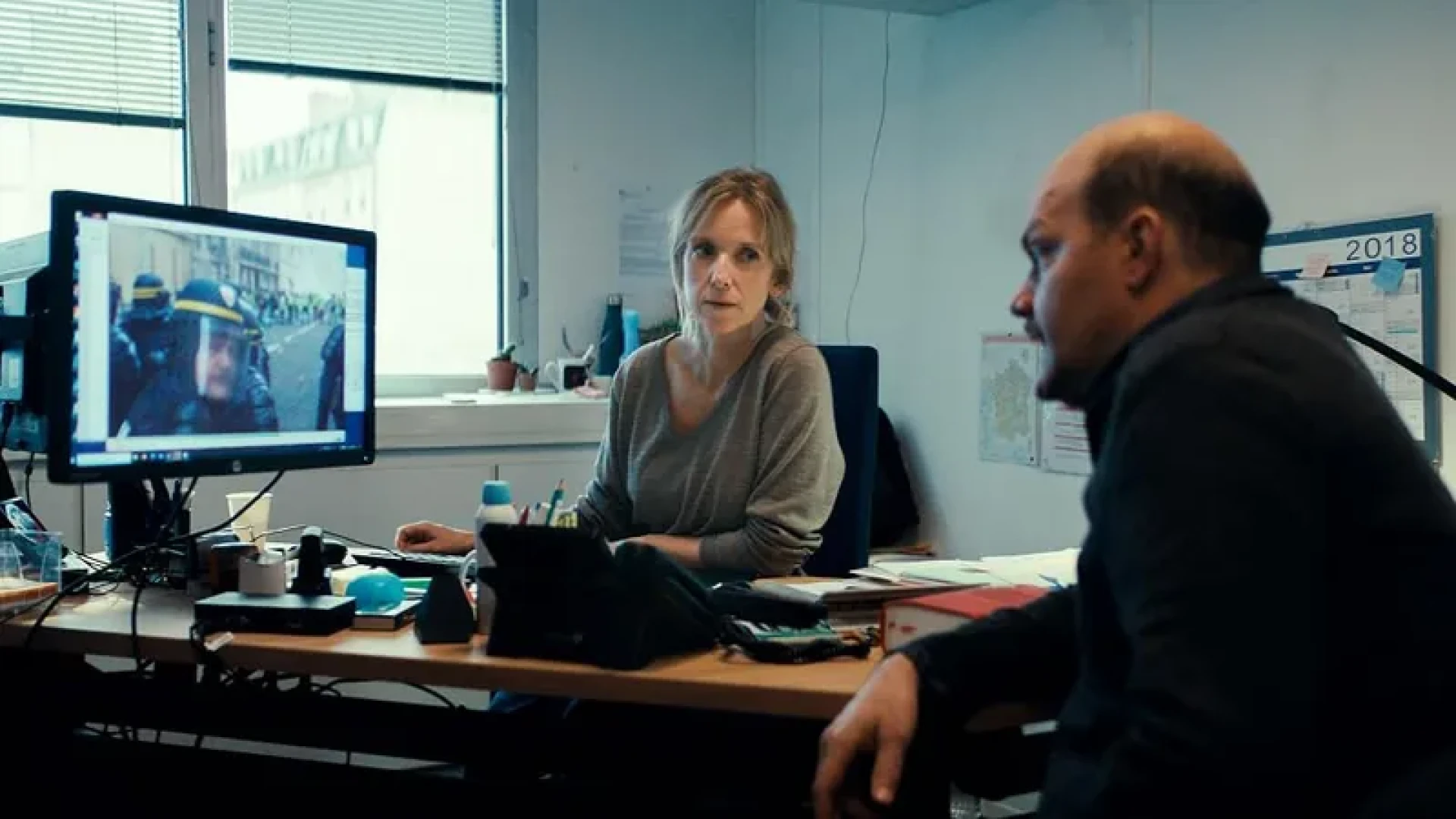
"You did your job well," someone tells Léa Drucker's internal affairs investigator toward the end of Case 137, "but what use is your job?" Reminded me of Sicario, not at all intensity-wise (it's absorbing rather than gripping) but as a similarly pessimistic portrait of a female cop who tries to do the right thing at every turn and gets swallowed up by a system designed to protect the powerful, not the vulnerable. (Based on an actual incident here.) Just watching her work is pure pleasure—this ranks among the most fascinatingly detailed recent police procedurals, hinging to a troubling degree (even though we see no abuse) on the omnipresence of security cameras in public spaces, as Bertrand and her team determine the suspects' likely movements based on glimpses from a variety of angles and locations (none of them the actual crime scene, though there's a whole spellbinding sequence that sees her spot a figure at a hotel window in one image and painstakingly work out who that person must have been, with galvanizing results that, as the figure in the window accurately and glumly predicts, ultimately make no difference). Nothing revelatory, you've seen this basic story many times (including its token attempts to incorporate aspects of the protagonist's personal life), but very solidly orchestrated. And depressing.
ANAL-RETENTIVE TITLE CORNER: No potential ambiguity here—I'm just annoyed that they're going with Case in Anglophone territories, since "dossier" is an English word and Dossier 137 (the original French title) sounds much cooler.
La bola negra (Javier Calvo & Javier Ambrossi, Spain/France): 52 [TIFF ’26]
Netflix should release this as Blackballed!, which is more in keeping with its aggressively energetic tenor. Basic idea’s solid, speculating about an unfinished story or novel (changed to a play here, for some reason) by Federico García Lorca: One storyline dramatizes that, complete with invented conclusion (cue grave-rolling); another thread, set during the Spanish Civil War, follows a coward who joins the Nationalists to save his skin and falls for García Lorca's real-life lover, Rafael Rodríguez Rapún; and then in I think it’s 2017 an ostensibly random dude (who turns out to have a link to someone named above) believes he may have found La bola negra's missing pages. These tales unfold simultaneously, with constant cross-cutting over some 159 minutes, and only the wartime one really justifies all the breathless attention afforded to it; I could have done with 75% less of the present-ish day stuff, little of which is germane to the whole apart from seeking to ensure that all three timelines foreground queerness. Glenn Close and Penélope Cruz show up in cameos to negligible effect, with the latter more recognizable to me vocally than facially. It’s fairly Netflix-y.
Once Upon a Time in Harlem (David Greaves, USA): 56 [TIFF ’26]
Friends dug this a bit more than I did, and I’d argue that the (terrific) movie they describe only really emerges during the last half hour or so. That’s when the soirée (held at Duke Ellington’s home in 1972…though, oddly, Sir Duke’s never seen) gets a little contentious, in a friendly way, with various luminaries asserting a salon-appropriate version of “I’ve got the conch!” and challenging each other’s memories and perception of the Harlem Renaissance. Bit of a polite free-for-all, invigorating as well as informative. Prior to that, William Greaves’ footage* plays a lot like standard-issue talking-head interviews (supplemented with archival stills), even when said heads talk whilst partying. (Looks to me like sometimes W. Greaves corralled people into another room in order to get more conventional uninterrupted documentary soundbites.) Historically invaluable, needless to say, and I can easily imagine it being a regular future double-bill with A Great Day in Harlem (same basic idea except they’re all jazz musicians). But I preferred the cacophonous conversation to the lengthy series of individual statements.
* ANAL-RETENTIVE CREDITING CORNER: Both TIFF and NYFF attribute the film’s direction to both William Graves and David Greaves (William’s son). Onscreen, however, it says “Conceived and filmed by William Greaves,” followed by “Directed by David Greaves.” Which I take to mean that David was primarily responsible for assembling the footage (all of which was shot in ’72, I believe, though there’s a little recent voiceover) into an actual movie. I therefore also consider it a 2026 film, unlike say Amazing Grace which I placed in 1972 because it’s clear that Pollack completed it back then apart from the soundtrack issues.

Comments (0)