

Delicious Story - FM26 The Stupid 4-4-2 Brexit | Swansea Season 3 part 2
infoAbout This Title
The third season of the Swansea Wonderkids project takes us back to one of the simplest structures in football: a classic 4-4-2 with two central midfielders.
No defensive midfielder, no attacking midfielder and no attempt to overcomplicate the shape.
The objective was to see whether the same young squad could continue progressing in the Premier League while using a more direct and traditional system.
Season Results
8th in the Premier League
FA Cup Quarter Final, eliminated by Chelsea
Carabao Cup Fourth Round, eliminated by Arsenal
Improved from 13th to 8th in our second Premier League season
No new players bought
Every match was played.
From Survival to a Top-Half Challenge
Last season, Swansea finished 13th with the Luis de la Fuente 4-2-3-1 Theory.
That system helped us survive, but it also showed some clear defensive limitations. For the third season, I wanted to move away from the attacking midfielder and return to two central midfielders.
This is where the main idea of the Stupid Series becomes important.
Central midfielders are among my favourite roles in FM26 because they can provide a simple and reliable connection between the defensive and attacking units. Instead of adding another specialised role, this tactic uses a traditional midfield four:
Two Wide Midfielders
Two Central Midfielders
Two strikers
Two Full-Backs
Two central defenders
It is simple on paper, but the interaction between the roles still creates several different behaviours in and out of possession.
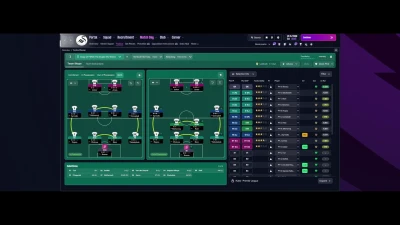
The Tactical Structure
In Possession
The team maintains a recognisable 4-4-2:
Two CHF roles in attack
Two Wide Midfielders
Two Central Midfielders
Two Full-Backs supporting from deeper positions
Two Ball-Playing Centre-Backs
The intention is to progress vertically, find the front two early and then attack the spaces created around them.
The wide midfielders provide width without beginning too high up the pitch, while the central midfielders give us a stable base behind the two strikers.
Out of Possession
The structure becomes a compact 4-4-2 mid block:
The strikers become TCFs
The wide midfielders become TWMs
The central midfielders operate as WDMs
The Full-Backs become more conservative PFBs
The goalkeeper changes to a Sweeper Keeper
The entire team is divided into clear lines.
The strikers begin the pressure, the midfield four protect the centre and the defensive line remains compact behind them.
It is not a complicated defensive system. The objective is to reduce unnecessary movement and keep every player connected to the unit around him.
The Premier League Performance
The Data Hub described Swansea as:
Better than average overall
Better than average offensively
Below average defensively
The main Premier League numbers were:
1.7 goals per match
1.6 non-penalty xG per 90
15.0 shots per match
49.6% of shots on target
86.9% pass completion
1.4 goals conceded per match
1.4 xGA per match
The attacking improvement was clear.
The team produced more shots, created more consistently and scored enough goals to move from a relegation battle into the top half of the league.
Defensively, we were still not an elite team. The structure was more stable than the previous 4-2-3-1, but the quality and development level of the players continued to place a limit on what we could achieve.
Player Performances
Jake Jones
The main scorer of the season:
45 appearances
29 goals
11 assists
7.36 average rating
Jones became the reference point of the attack and gave the tactic the consistent goalscoring output it needed.
Cole Campbell
Campbell continued to be one of the most important players in the project:
45 appearances
11 goals
16 assists
7.34 average rating
He produced from the right side without needing to play as a traditional attacking winger.
Jan-Simon Symalla
A productive season from the opposite flank:
45 appearances
9 goals
12 assists
7.10 average rating
Emmanuel Chukwu
One of the most reliable defenders:
45 appearances
4 goals
2 assists
7.09 average rating
The defensive numbers of the team were not perfect, but several individual defenders continued to develop well.
One Idea Can Produce Multiple Tactics
This is the most important part of the project.
A tactical idea does not have to produce only one tactic.
The same general testing protocol can lead to:
A 4-3-3
A 4-2-3-1
A 4-4-2 with defensive midfielders
A 4-4-2 with central midfielders
More aggressive or more conservative versions of the same structure
They will not all perform equally, and they will not all suit the same players.
That is the point.
Football Manager contains too many role, duty and instruction combinations to create complete coverage of every possible system. The interesting part is understanding why a variation works, which players it requires and where its limitations appear.
This 4-4-2 was built around the belief that the central midfielder remains one of the strongest and most useful roles in FM26.
The result was our best Premier League season so far.
Overall Verdict
The Stupid 4-4-2 Brexit moved Swansea from 13th to 8th without buying new players.
It was not defensively perfect, but it gave the team:
A clearer structure
Better attacking production
More support for the two strikers
Greater midfield stability
A system that suited the existing squad better
The squad is still young, inexpensive and incomplete. Some players are developing into genuine Premier League options, while others are beginning to show their limits.
That remains the central purpose of this save.
We are not immediately replacing every player who struggles. We are testing how far the original group can go and discovering which profiles can continue developing with the club.
After surviving in Season 2, Swansea are now a top-half Premier League team.
Download Package
The release includes:
FM26 The Stupid 4-4-2 Brexit tactic
Swansea Season 3 game save
Final squad and player statistics
Competition and Data Hub screenshots
Team Instructions and Player Instructions video for console players
The third season of the Swansea Wonderkids project takes us back to one of the simplest structures in football: a classic 4-4-2 with two central midfielders.
No defensive midfielder, no attacking midfielder and no attempt to overcomplicate the shape.
The objective was to see whether the same young squad could continue progressing in the Premier League while using a more direct and traditional system.
Season Results
8th in the Premier League
FA Cup Quarter Final, eliminated by Chelsea
Carabao Cup Fourth Round, eliminated by Arsenal
Improved from 13th to 8th in our second Premier League season
No new players bought
Every match was played.
From Survival to a Top-Half Challenge
Last season, Swansea finished 13th with the Luis de la Fuente 4-2-3-1 Theory.
That system helped us survive, but it also showed some clear defensive limitations. For the third season, I wanted to move away from the attacking midfielder and return to two central midfielders.
This is where the main idea of the Stupid Series becomes important.
Central midfielders are among my favourite roles in FM26 because they can provide a simple and reliable connection between the defensive and attacking units. Instead of adding another specialised role, this tactic uses a traditional midfield four:
Two Wide Midfielders
Two Central Midfielders
Two strikers
Two Full-Backs
Two central defenders
It is simple on paper, but the interaction between the roles still creates several different behaviours in and out of possession.
The Tactical Structure
In Possession
The team maintains a recognisable 4-4-2:
Two CHF roles in attack
Two Wide Midfielders
Two Central Midfielders
Two Full-Backs supporting from deeper positions
Two Ball-Playing Centre-Backs
The intention is to progress vertically, find the front two early and then attack the spaces created around them.
The wide midfielders provide width without beginning too high up the pitch, while the central midfielders give us a stable base behind the two strikers.
Out of Possession
The structure becomes a compact 4-4-2 mid block:
The strikers become TCFs
The wide midfielders become TWMs
The central midfielders operate as WDMs
The Full-Backs become more conservative PFBs
The goalkeeper changes to a Sweeper Keeper
The entire team is divided into clear lines.
The strikers begin the pressure, the midfield four protect the centre and the defensive line remains compact behind them.
It is not a complicated defensive system. The objective is to reduce unnecessary movement and keep every player connected to the unit around him.
The Premier League Performance
The Data Hub described Swansea as:
Better than average overall
Better than average offensively
Below average defensively
The main Premier League numbers were:
1.7 goals per match
1.6 non-penalty xG per 90
15.0 shots per match
49.6% of shots on target
86.9% pass completion
1.4 goals conceded per match
1.4 xGA per match
The attacking improvement was clear.
The team produced more shots, created more consistently and scored enough goals to move from a relegation battle into the top half of the league.
Defensively, we were still not an elite team. The structure was more stable than the previous 4-2-3-1, but the quality and development level of the players continued to place a limit on what we could achieve.
Player Performances
Jake Jones
The main scorer of the season:
45 appearances
29 goals
11 assists
7.36 average rating
Jones became the reference point of the attack and gave the tactic the consistent goalscoring output it needed.
Cole Campbell
Campbell continued to be one of the most important players in the project:
45 appearances
11 goals
16 assists
7.34 average rating
He produced from the right side without needing to play as a traditional attacking winger.
Jan-Simon Symalla
A productive season from the opposite flank:
45 appearances
9 goals
12 assists
7.10 average rating
Emmanuel Chukwu
One of the most reliable defenders:
45 appearances
4 goals
2 assists
7.09 average rating
The defensive numbers of the team were not perfect, but several individual defenders continued to develop well.
One Idea Can Produce Multiple Tactics
This is the most important part of the project.
A tactical idea does not have to produce only one tactic.
The same general testing protocol can lead to:
A 4-3-3
A 4-2-3-1
A 4-4-2 with defensive midfielders
A 4-4-2 with central midfielders
More aggressive or more conservative versions of the same structure
They will not all perform equally, and they will not all suit the same players.
That is the point.
Football Manager contains too many role, duty and instruction combinations to create complete coverage of every possible system. The interesting part is understanding why a variation works, which players it requires and where its limitations appear.
This 4-4-2 was built around the belief that the central midfielder remains one of the strongest and most useful roles in FM26.
The result was our best Premier League season so far.
Overall Verdict
The Stupid 4-4-2 Brexit moved Swansea from 13th to 8th without buying new players.
It was not defensively perfect, but it gave the team:
A clearer structure
Better attacking production
More support for the two strikers
Greater midfield stability
A system that suited the existing squad better
The squad is still young, inexpensive and incomplete. Some players are developing into genuine Premier League options, while others are beginning to show their limits.
That remains the central purpose of this save.
We are not immediately replacing every player who struggles. We are testing how far the original group can go and discovering which profiles can continue developing with the club.
After surviving in Season 2, Swansea are now a top-half Premier League team.
Download Package
The release includes:
FM26 The Stupid 4-4-2 Brexit tactic
Swansea Season 3 game save
Final squad and player statistics
Competition and Data Hub screenshots
Team Instructions and Player Instructions video for console players

Comments (0)