
Page 1 failed to load.

Didrik Magnus-Andresen - Urmē — The Amusing
 More from Didrik Magnus-Andresen
Didrik Magnus-Andresen - Once we ran
About This Title
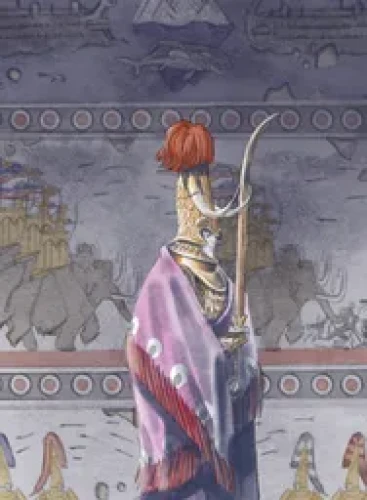
Of all the breeds of men the elves have made, none are as rare, or extravagant as the Urmē, the Amusing Ones.
The Urmē are bred to be tiny in stature, with large heads, crooked limbs, buck teeth, and eyes deliberately bred to become wall-eyed. Their feet are bound from birth through painful procedures until they become impossibly small, leaving them horribly unbalanced and disproportionate. They develop a strange, wobbling gait, as though they are in constant danger of falling over.
Their upturned noses and bulging eyes, bloated stomachs, and perpetual tendency to develop hernias, accompanied by their shortness of breath, make them seem as though they are in a perpetual state of suffering.
And all of this is by design.
They are made as a mockery of mankind: a reminder that no matter how grand a Ledger-King might think himself, or how wise a scribe might consider himself, they are nothing more than shaped subjects of their elven masters, formed as a potter forms clay.
Yet an elf would rarely demean himself by reprimanding or correcting such subjects directly. The Urmē, on the other hand, will.
For despite their appearance, they possess keen intellects and are excellent observers. Their appearance alone bars them from holding any office within the village, yet through song and jest they can strike precisely where it hurts the pride of those who grow too self-important.
They are also highly attuned to the moods of their masters. They are known to perform foul jests whenever their master’s composure is in danger of being lost: dancing upon the dining table of a Ledger-King while playing their lyres and singing, only to stop and break wind in his face, or defecate upon his plate, forcing him to pretend that he finds it amusing.
In this way, they are useful for mocking foreign dignitaries and rival masters as well. For to all but the Urmē, it is forbidden to speak ill of another elven lord, even one who is hated. But to such pitiful and amusing creatures as these, all is permitted.
And thus the Urmē possess a strange privilege.
They may say what no other man may say.
They may mock whom no other man may mock.
And everyone knows that the elf who laughs most loudly is often the one who ordered the joke.
Comments (0)