
Page 1 failed to load.
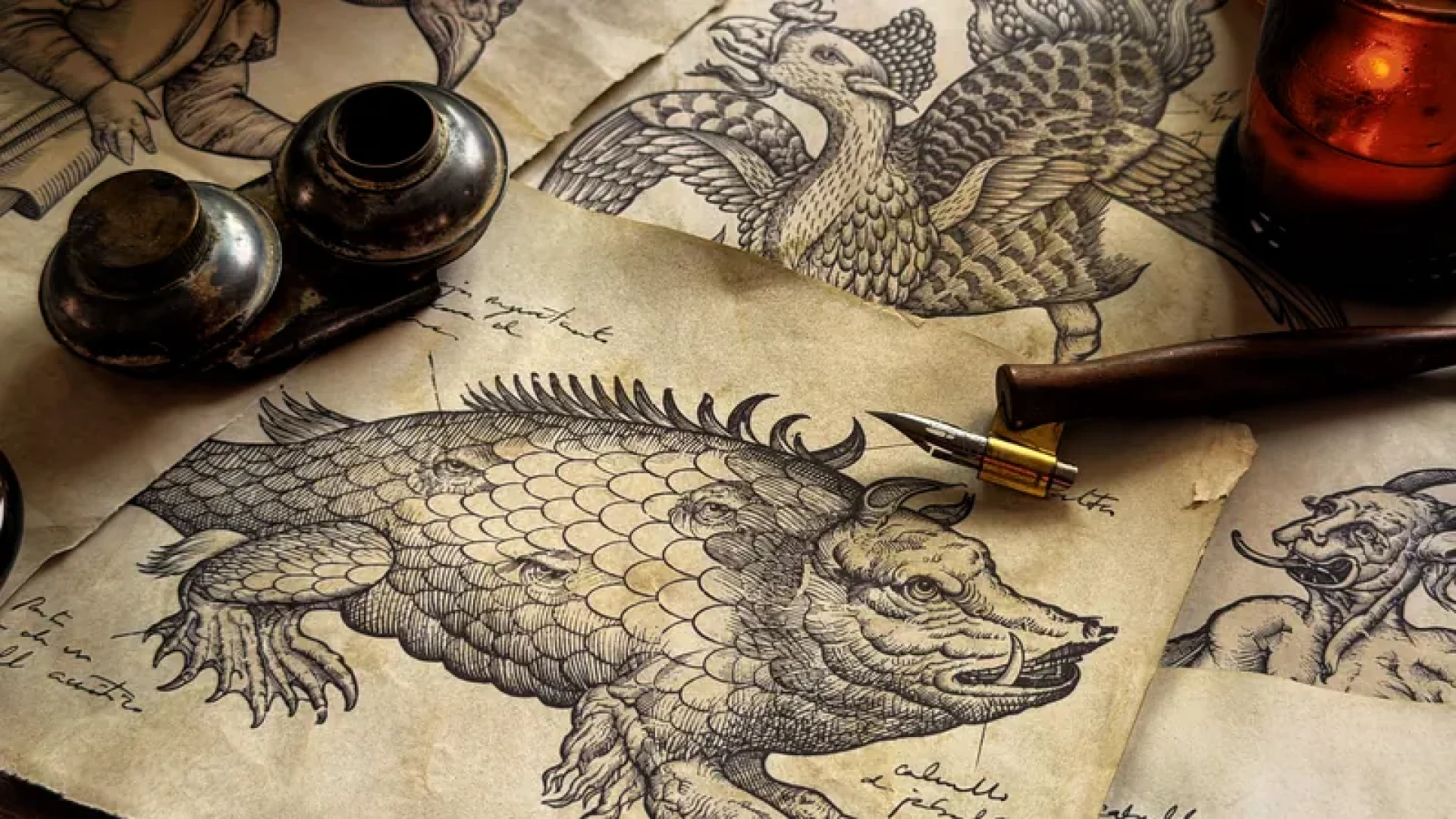
Alicia Aradilla - Monthly discovery: The Great Catalogue of Monsters
 More from Alicia Aradilla
Alicia Aradilla - Paint & Music: Skull (BONUS POST)
About This Title
Con Halloween a la vuelta de la esquina, se me ha ocurrido traeros este libro tan curioso que descubrí hace tiempo. Se trata de una de las primeras grandes enciclopedias ilustradas de monstruos de la historia, que se publicó hace casi 400 años, en 1642, cuando los monstruos no eran cuentos para asustar a los niños, sino seres que se creían reales y que convivían entre los humanos… Espero que os guste y os parezca terroríficamente inspirador.
With Halloween just around the corner, I thought I’d share this fascinating book that I discovered some time ago. It is one of the earliest great illustrated encyclopaedias of monsters in history, published almost 400 years ago, in 1642, when monsters were not stories told to frighten children, but creatures believed to be real and to live alongside humans… I hope you enjoy it and find it terrifyingly inspiring.
El autor y su idea / The author and his ideaCuando Monstrorum Historia llegó ante mis ojos, lo primero que hice fue preguntarme sobre el autor y qué le llevó a crear este libro tan particular y complicado, ya que, como os podéis imaginar, dibujar y catalogar algo que no hemos visto nunca es una tarea bastante difícil. El científico y naturalista italiano Ulisse Aldrovandi fue profesor de filosofía natural en la Universidad de Bolonia y uno de los fundadores de su Jardín Botánico. Pero, si algo lo caracterizó, fue su afán por coleccionar especímenes traídos de todos los rincones del mundo, llegando a poseer más de 18.000 objetos naturales y curiosidades que, más allá de ser una inspiración para la vista y provocar el asombro de sus amigos y estudiantes, se convirtieron en una de sus principales fuentes de investigación. Este gran gabinete de curiosidades aún hoy puede visitarse y, os confieso, que ya lo he apuntado en mi lista de lugares que quiero ver algún día.
When Monstrorum Historia first came to my attention, the first thing I wondered about was its author and what had led him to create such a peculiar and complex book. As you can imagine, drawing and cataloguing something we have never actually seen is no easy task. The Italian scientist and naturalist Ulisse Aldrovandi was Professor of Natural Philosophy at the University of Bologna and one of the founders of its Botanical Garden. But if there was one thing that defined him, it was his passion for collecting specimens brought from every corner of the world. He eventually amassed more than 18,000 natural objects and curiosities which, beyond being visually inspiring and astonishing his friends and students, became one of his main sources of research. This extraordinary cabinet of curiosities can still be visited today and, I must confess, I’ve already added it to my list of places I’d love to see one day.
Su inquietud por estudiar y ordenar el mundo se trasladó del espacio físico a los libros en forma de enciclopedias. Empezó por las aves: en 1599 publicó el primer volumen de Ornithologiae, una obra enorme e ilustrada en la que intentaba recopilar y clasificar las aves conocidas. También estudió insectos y dejó preparados numerosos trabajos sobre otros animales, entre ellos serpientes y dragones, hasta llegar a Monstrorum Historia, con su particular estudio y clasificación de las anomalías y rarezas de la naturaleza.
His desire to study and organise the world eventually moved from the physical space of his collection to the pages of books, in the form of encyclopaedias. He began with birds: in 1599, he published the first volume of Ornithologiae, an enormous illustrated work in which he attempted to compile and classify the known species of birds. He also studied insects and prepared numerous works on other animals, including snakes and dragons, eventually leading to Monstrorum Historia, with its unusual study and classification of nature’s anomalies and curiosities.
¿Cómo se dibuja un monstruo? / How do you draw a monster?Aldrovandi tenía claro que, para comprender el mundo, era necesario estudiarlo, observarlo y catalogarlo, y nada mejor que el dibujo para esta tarea. Su extraordinaria colección incluía más de 8.000 dibujos y pinturas de animales, plantas, minerales, etc., realizados por artistas bajo su supervisión, además de 14 armarios repletos de matrices xilográficas destinadas a ilustrar sus libros. Dibujar una planta o un animal de su colección era sencillo porque simplemente tenían que plasmarlo en el papel, pero el estudio de esos otros seres dependía de los testimonios de las personas que aseguraban haberlos visto, descripciones que se unían a las de la propia tradición oral. Ya nos podemos imaginar a este pobre científico tomando notas de cuántas aletas tenía una sirena o cómo era el pelaje de un unicornio…
Aldrovandi firmly believed that, in order to understand the world, it was necessary to study, observe and catalogue it, and what better tool for the task than drawing? His extraordinary collection included more than 8,000 drawings and paintings of animals, plants, minerals and other subjects, produced by artists under his supervision, as well as 14 cabinets filled with woodblocks intended to illustrate his books. Drawing a plant or animal from his collection was relatively straightforward: the artists simply had to reproduce what they could see in front of them. Studying those other creatures, however, depended on accounts from people who claimed to have seen them, combined with descriptions handed down through oral tradition. We can only imagine the poor scientist taking notes on how many fins a mermaid had or what a unicorn’s hair looked like…
Sin embargo, la magia del arte es precisamente hacer realidad aquello que no podemos ver. Una vez escuché que quien pinta algo primero tiene el poder de crearlo. Y, sin querer, Aldrovandi estaba generando un archivo visual de esos miedos y supersticiones que formarían parte de nuestro imaginario colectivo. Así que, con esas descripciones diferentes dibujantes de la época dieron forma a esas criaturas en las ilustraciones que luego pasarían a ser xilografías, para poder reproducirlas en sus libros. Siguiendo la misma estética que sus estudios de aves, estos monstruos aparecían con sombreados a línea, sobre fondos blancos y bastante detalle, para darles el aspecto de un estudio científico y así dotarlos de mayor credibilidad.
But the magic of art lies precisely in its ability to make real what we cannot see. I once heard that whoever paints something first has the power to create it. And, without quite intending to, Aldrovandi was building a visual archive of the fears and superstitions that would eventually become part of our collective imagination. Using these descriptions, different artists of the period gave shape to these creatures in drawings that were later turned into woodcuts so they could be reproduced in his books. Following the same aesthetic as his studies of birds, the monsters appeared against white backgrounds, rendered in considerable detail with line shading, giving them the appearance of scientific studies and therefore making them seem all the more credible.
¿Pero qué es un monstruo? / But what is a monster?O mejor dicho ¿qué se consideraba un monstruo en aquella época? Sencillamente, en siglo XVII se podía considerar monstruoso todo aquello que se salía de la norma habitual de la naturaleza o que resultaba difícil de explicar. Por ejemplo, en este libro encontraremos sirenas, dragones, unicornios y otras criaturas fantásticas, pero también malformaciones, siameses o personas con tumores, que hoy en día sabemos que son casos médicos reales. También veremos animales como los rinocerontes, jirafas o cocodrilos representados de una manera muy particular, ya que hasta entonces muy pocas personas en Europa los habían visto con sus propios ojos. No culpo a esos artistas porque, la verdad, si a mí me llegara la descripción de un ser con un solo cuerno en la nariz, cuerpo musculado y piel impenetrable, estoy segura de que no lo habría hecho mejor. Y ya no digamos si lo que vemos está bajo el agua, a decenas de metros de profundidad, donde una ballena puede resultar aterradora si somos los primeros en verla.
Or rather, what was considered a monster at the time? Quite simply, in the 17th century, anything that departed from what was considered the normal order of nature, or that was difficult to explain, could be regarded as monstrous. For example, in this book we find mermaids, dragons, unicorns and other fantastic creatures, but also congenital abnormalities, conjoined twins and people with tumours, which we now understand as real medical conditions. We also see animals such as rhinoceroses, giraffes and crocodiles represented in rather unusual ways, because very few people in Europe had ever seen them with their own eyes. I can hardly blame those artists because, to be fair, if someone gave me a description of a creature with a single horn on its nose, a muscular body and impenetrable skin, I’m pretty sure I wouldn’t have done any better. And that’s without even considering what might be lurking underwater, dozens of metres beneath the surface, where a whale could seem terrifying if you were among the first people ever to encounter one.
Un ‘monstruo’ real / A real ‘monster’Hay un caso documentado en el libro de un ‘hombre lobo’ que es muy conocido en España porque fue alguien que existió realmente. Se trata de Petrus Gonsalvus, nacido en Tenerife, que padecía hipertricosis, una enfermedad que hace que crezca pelo en el cuerpo de manera descontrolada, incluido el rostro. Petrus no fue alguien que vivía al margen de la sociedad, al contrario de lo que se pueda pensar, sino que llegó a formar parte de la corte de Enrique II de Francia, participaba en actos públicos y tuvo familia. Aldrovandi conoció a algunos de sus hijos y los plasmó en el libro. Además, parece ser que esta historia sirvió como inspiración para crear la famosa película de La Bella y la Bestia. Aquí es donde vemos el poder de aquellas ilustraciones, incluso para viajar en el tiempo…
There is a documented case in the book of a ‘wolf man’ who is particularly well known in Spain because he was a real person. His name was Petrus Gonsalvus, born in Tenerife, and he had hypertrichosis, a condition that causes excessive hair growth on the body, including the face. Contrary to what we might imagine, Petrus did not live on the margins of society. He became part of the court of Henry II of France, took part in public life and had a family. Aldrovandi met some of his children and depicted them in the book. It also seems that this story later helped inspire the famous tale of Beauty and the Beast. This is where we can really see the power of those illustrations—even their ability to travel through time…
Dónde encontrar el libro / Where to find the bookHoy en día podemos encontrar este libro (originalmente escrito en latín) traducido a numerosas lenguas. En Amazon tenéis decenas de versiones que incluyen las ilustraciones originales. Pero, si tenéis curiosidad y queréis echarle un vistazo, os recomiendo entrar en esta web https://monstrorum-historia.joonaheino.com/ que es gratuita y no solo tiene el manuscrito en inglés, sino también su colección de ilustraciones por separado, junto con una breve descripción. Os aviso de que algunas de ellas son bastante inquietantes, así que espero no ser la culpable de sueños raros o pesadillas en vuestra noche de Halloween. Ojalá este libro os resulte curioso y os ayude a resolver alguna de esas preguntas del Trivial que solo la comunidad de Patreon acertará seguro. ¡Buen fin de semana!
Today, this book, originally written in Latin, can be found translated into numerous languages. On Amazon, you can find dozens of editions that include the original illustrations. But if you’re curious and would simply like to take a look, I recommend visiting this website https://monstrorum-historia.joonaheino.com/ It’s free and not only offers the manuscript in English, but also presents its collection of illustrations separately, each accompanied by a brief description. A word of warning: some of them are rather unsettling, so I hope I won’t be responsible for any strange dreams or nightmares on Halloween night. I hope you find this book as fascinating as I do and that it helps you answer one of those Trivial Pursuit questions that only members of our Patreon community will now be guaranteed to get right. Have a great weekend!
Comments (0)